
Montevista | Military Funeral Honors: What to Expect
Military Funeral Honors: What to Expect


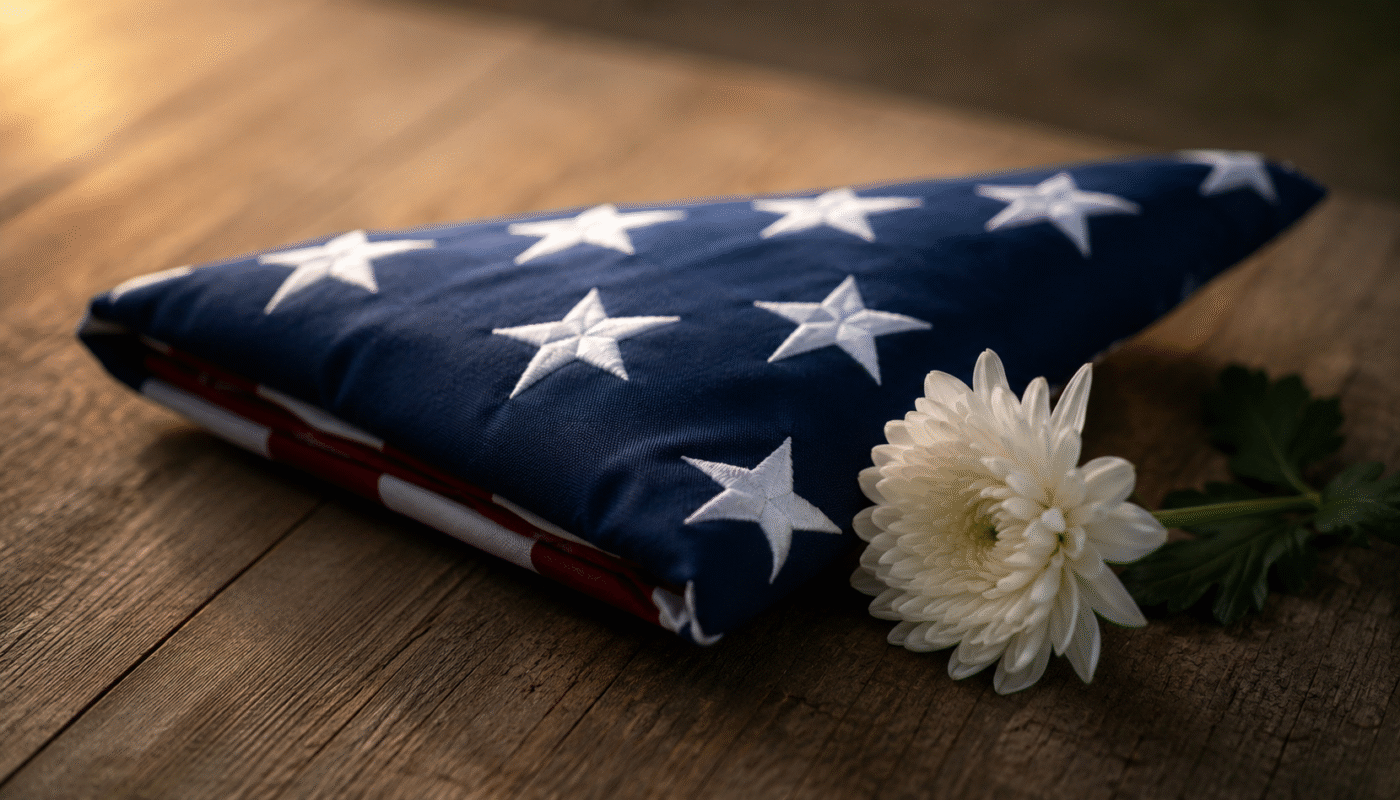
Every eligible veteran is entitled to military funeral honors as a final tribute to their service to our nation. This meaningful ceremony includes the folding and presentation of the American flag and the playing of Taps, performed by at least two uniformed military personnel. Understanding what military honors involve and how to request them ensures veterans receive the recognition they’ve earned.
This guide explains military funeral honors eligibility, what the ceremony includes, how to request honors, and what families can expect during this moving tribute.
What Are Military Funeral Honors?
Federal Law Requirement
Defense Authorization Act of 1999 mandates:
- Every eligible veteran entitled to military funeral honors
- Minimum of two uniformed military personnel
- Folding and presentation of American flag
- Playing of Taps
“A grateful Nation’s final salute to honor the veteran’s service to this country”
Purpose and Meaning
Military funeral honors serve to:
- Recognize and honor the veteran’s service
- Show gratitude on behalf of the nation
- Provide dignity and respect
- Offer comfort to family
- Acknowledge sacrifice
Brief but deeply meaningful ceremony typically lasting 10-15 minutes
Who Is Eligible for Military Funeral Honors?
Basic Eligibility
Eligible veterans:
- Military members who died on active duty
- Veterans who served in active duty and were discharged under conditions other than dishonorable
- Reservists and National Guard members with qualifying service
Key requirement: Discharge under conditions other than dishonorable
Documentation needed: DD-214 or discharge papers showing character of service
Not Eligible
Ineligible for military honors:
- Service members with dishonorable discharges
- Those whose service doesn’t qualify
- Civilian employees of military (unless also veterans)
Verify eligibility: Provide DD-214 to funeral director or contact military casualty office
What’s Included in Military Funeral Honors
Standard Military Honors (All Eligible Veterans)
Minimum honors ceremony includes:
1. Uniformed honor guard
- At least two uniformed military personnel
- Representing veteran’s branch of service when possible
- Full military dress uniform
2. Folding of the American flag
- Precise 13-fold ceremony
- Done by honor guard
- Each fold has symbolic meaning
3. Presentation of flag to next of kin
- Senior member of honor guard presents flag
- Formal presentation words
- Given to designated family member
4. Playing of Taps
- 24-note bugle call
- Live bugler when available
- High-quality recording if live bugler unavailable
These four elements provided to all eligible veterans
Full Military Honors (Higher Ranks and Special Circumstances)
Enhanced honors may include:
Firing party (rifle volley):
- Three-volley salute
- Seven service members with rifles
- Three shots fired in unison
- NOT a 21-gun salute (that’s for heads of state)
Live bugler:
- Guaranteed live Taps
- More personnel
Pallbearers:
- Military pallbearers carry casket
- Usually 6-8 service members
Color guard:
- Flag bearers
- Additional ceremony elements
Larger honor guard detail:
- More military personnel
- Additional formality
Who receives full honors:
- Active duty deaths
- High-ranking officers
- Special circumstances
- Depends on availability and branch policies
Most veterans receive standard honors, which are still dignified and meaningful
The Flag Folding Ceremony
The 13 Folds
Each fold of the American flag has symbolic meaning:
Traditional meanings:
- Life
- Eternal life belief
- Honor and remembrance of veteran
- Weaker nature and trust in God
- Country tribute
- Pledge of allegiance
- Tribute to Armed Forces
- Valley of the shadow of death
- Womanhood and mothers
- Fathers
- Lower portion of seal of King David and Solomon
- Emblem of eternity
- In God We Trust
Result: Tri-corner fold resembling tri-corner colonial hat, symbolizing the veterans who served under General Washington.
Honor guard folds with precision—practiced ceremony performed with reverence
Flag Presentation Words
Standard presentation statement:
“On behalf of the President of the United States, [the United States Army/Navy/Air Force/Marine Corps/Coast Guard], and a grateful nation, please accept this flag as a symbol of our appreciation for your loved one’s honorable and faithful service.”
Variations exist but message is consistent—nation’s gratitude for service
Presented to:
- Surviving spouse
- Other family member designated by family
- Family decides who receives flag
The Playing of Taps
Origin and Meaning
History:
- Composed during Civil War (1862)
- Called “lights out” for soldiers
- Later adopted for military funerals
24 notes signaling day’s end, rest, and peace
Lyrics (unofficial): Day is done, gone the sun, From the lakes, from the hills, from the sky; All is well, safely rest, God is nigh.
Deeply moving portion of ceremony
Live Bugler vs. Recording
Live bugler:
- Provided when available
- Preferred and more impactful
- Limited availability of trained buglers
Electronic recording:
- High-quality ceremonial bugle with recording
- Looks authentic
- Guaranteed availability
- Respectful alternative when live bugler unavailable
Either method provides dignified tribute
How to Request Military Funeral Honors
Through Your Funeral Director (Recommended)
Easiest method:
Step 1: Provide veteran’s DD-214 to funeral director
Step 2: Funeral director coordinates with military
Step 3: Confirm date, time, location
Most funeral directors experienced with arranging military honors—let them handle logistics
Direct Request
You can also request directly:
Contact Department of Defense:
- Call 1-877-MIL-HONR (1-877-645-4667)
- Provide veteran information
- Confirm service details
Or contact appropriate military branch:
- Army: 1-703-614-3915
- Navy: 1-800-368-6289
- Air Force: 1-703-696-0537
- Marines: 1-800-847-1597
- Coast Guard: 1-703-842-1043
Information needed:
- Veteran’s full name
- Social Security number
- Branch of service
- Dates of service
- Funeral/burial date, time, location
- Funeral director contact
Timing
When to request:
- As soon as funeral arrangements made
- At least 2-3 weeks advance notice preferred
- Last-minute requests accommodated when possible
Military will make every effort to provide honors regardless of notice timeframe
Where Honors Can Be Performed
Military honors available at:
- National cemeteries (arranged automatically)
- State veterans cemeteries
- Private cemeteries
- Funeral homes
- Churches
- Family property
- Any location family chooses
Honor guard will travel to perform ceremony at family’s chosen location
What Families Can Expect
Before the Ceremony
Coordination:
- Honor guard arrives before service time
- Meets with funeral director
- Confirms details and positioning
- Generally not visible to family before ceremony
Family responsibilities:
- Provide DD-214
- Designate who receives flag
- Inform funeral director of any special requests
During the Ceremony
Typical sequence:
1. Positioning:
- Honor guard takes position near casket or urn
- Two or more uniformed service members
2. Flag draping (if applicable):
- If flag draped over casket, honor guard prepares to fold
3. Flag folding:
- Performed with precision
- Deliberate, respectful pace
- Silent or with narration (varies)
4. Playing of Taps:
- Played after flag folded
- All stand at attention
- Deeply moving moment
5. Flag presentation:
- Senior member of honor guard presents folded flag
- Kneels before next of kin
- Speaks presentation words
- Hands flag to designated recipient
6. Salute:
- Honor guard salutes
- Departs quietly
Duration: 10-15 minutes typically
Emotional impact: Families often find ceremony provides comfort and meaningful closure
After the Ceremony
Family keeps:
- Folded American flag
- Memory of dignified tribute
Optional:
- Flag display case (family provides)
- Additional Presidential Memorial Certificate (can request from VA)
Special Considerations
Cremation
Military honors fully available for cremated remains:
- Flag may drape urn
- Or flag held during ceremony then folded
- Same honors ceremony
- Same respect and dignity
Multiple Veterans in Family
If multiple eligible veterans:
- Each entitled to separate honors
- Can be performed simultaneously if both buried same day
- Each receives individual flag presentation
Active Duty Deaths
Enhanced honors typically provided:
- Full military funeral when possible
- Branch-specific protocols
- Greater military participation
- Family may work with casualty assistance officer
National Cemetery Burials
Honors coordinated automatically:
- National cemetery arranges with military
- No separate request needed
- Standard part of national cemetery service
Volunteer Honor Guards
Many communities have volunteer honor guards:
- Veterans organizations (VFW, American Legion)
- Local military units
- Provide additional honors
- Supplement official military honors
Don’t replace official honors but add to ceremony
Branch-Specific Traditions
Army
- Army flag may be displayed
- Army service song may be played
- Army-specific protocols
Navy and Coast Guard
- Naval traditions
- Anchor emblems
- “Eternal Patrol” for submariners
- Bell ringing traditions
Air Force
- Air Force customs
- Missing Man formation (for aviators, in some cases)
- Specific protocols
Marine Corps
- Marine Corps traditions
- Emphasis on precision
- Marine Corps hymn
Each branch has unique customs while maintaining core elements (flag folding, Taps, presentation)
Common Questions
Does every veteran get military honors? Yes, every veteran discharged under conditions other than dishonorable is entitled to military funeral honors.
How much do military funeral honors cost? Nothing. Military funeral honors are provided free to all eligible veterans.
Can we have military honors if the veteran is cremated? Yes, absolutely. Full military honors are provided regardless of burial or cremation.
What if we’re having a memorial service weeks after burial? Military honors can be provided at memorial services separate from burial.
Can military honors be performed at a private cemetery? Yes, military honors are available at any location the family chooses.
What should I do with the flag after the funeral? Display it respectfully in your home. Many families purchase flag display cases.
Can we have music besides Taps? Yes, you can have additional music. Taps is the required military element.
What if there’s bad weather? Ceremony proceeds regardless of weather. Honor guard performs duties in all conditions.
Who decides who receives the flag? The family decides. Usually presented to surviving spouse, but family can designate anyone.
Can we take photos or video? Yes, documenting military honors is appropriate and welcomed.
Key Takeaways
Military funeral honors provide dignified final tribute:
- Every eligible veteran entitled to military funeral honors
- Minimum ceremony includes two uniformed service members, flag folding, flag presentation, and Taps
- Request through funeral director (easiest) or directly at 1-877-MIL-HONR
- Available at any location including cemeteries, funeral homes, churches
- No cost to family—provided by Department of Defense
- Advance notice helpful but last-minute requests accommodated
- Cremation doesn’t affect eligibility—full honors available
- Ceremony lasts 10-15 minutes and provides meaningful closure
- Family keeps American flag as symbol of nation’s gratitude
Military funeral honors ensure veterans receive the recognition they earned through service.
Military Funeral Honors Assistance at Monte Vista Memorial Gardens
Monte Vista Memorial Gardens coordinates military funeral honors for veterans and their families. We work with all military branches to ensure every eligible veteran receives appropriate military honors, from requesting honor guard to coordinating ceremony logistics.
Call 925-474-4625 to discuss military funeral honors and ensure your veteran receives proper recognition.