
Montevista | Environmental Impact of Green Burial
Environmental Impact of Green Burial


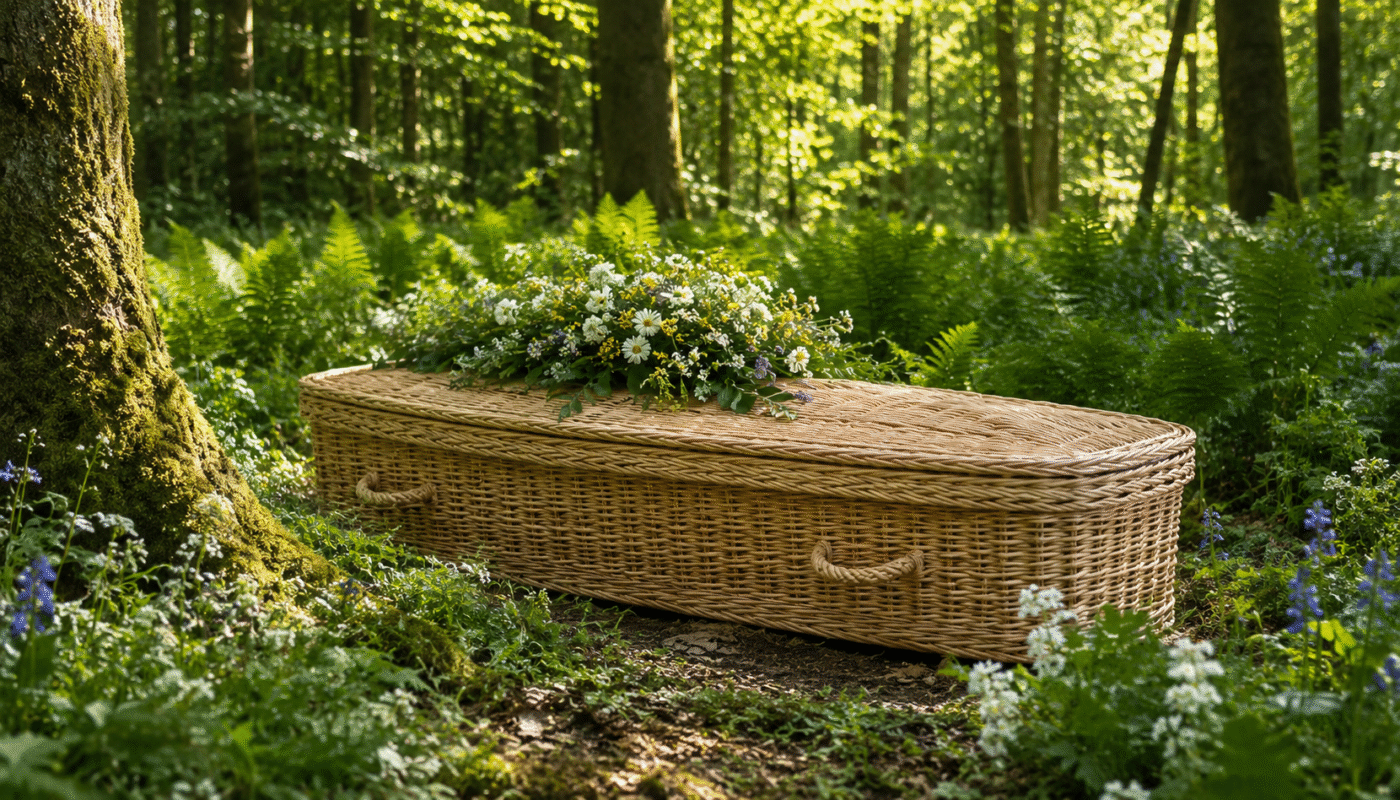
Green burial dramatically reduces the environmental impact of death care through natural decomposition, elimination of toxic chemicals, reduced resource consumption, and land conservation. Compared to traditional burial and cremation, green burial has the smallest environmental footprint while actively supporting ecosystem restoration.
This comprehensive analysis examines the environmental impact of green burial, compares it to other disposition methods, and explains how natural burial benefits the environment.
Understanding Green Burial’s Environmental Benefits
What Makes Green Burial Environmentally Friendly
Green burial eliminates or minimizes environmental harm through:
No toxic chemicals: – No embalming fluids (formaldehyde, methanol, ethanol) – No chemical lawn treatments – No concrete or steel
Biodegradable materials only: – Natural fiber shrouds or untreated wood – No metals, plastics, or synthetics – Everything decomposes naturally
Natural land management: – Native plants instead of non-native grass – No irrigation or minimal watering – No pesticides or fertilizers – Wildlife habitat preservation
Conservation focus: – Many green burial grounds protect land permanently – Habitat restoration projects – Carbon sequestration through plant growth
Comparing Environmental Impacts: Green Burial vs. Traditional Burial
Traditional Burial Environmental Costs
Embalming chemicals: – 827,060 gallons of embalming fluid buried annually in U.S. – Contains formaldehyde (carcinogen and environmental toxin) – Leaches into soil and potentially groundwater – No biodegradation—remains toxic indefinitely
Casket resources: – 104,272 tons of steel annually – 2,700 tons of copper and bronze – 30+ million board feet of hardwood – Significant mining, forestry, and manufacturing impacts
Burial vaults: – 1.6 million tons of concrete annually – Cement production major CO2 source – Non-biodegradable – Prevents natural decomposition
Cemetery maintenance: – Constant irrigation (drought concern in California) – Chemical fertilizers and pesticides – Gas-powered mowing equipment – Non-native grass monoculture (poor wildlife habitat)
Total traditional burial environmental cost: Very high
Green Burial Environmental Benefits
No toxic chemicals: – Zero embalming fluids – Zero chemical treatments – Safe for soil and water
Minimal resources: – Biodegradable container: untreated wood or cloth – No concrete, steel, or synthetic materials – Locally sourced materials often available
Natural decomposition: – Body enriches soil naturally – Nutrients support plant growth – Microorganisms thrive – Carbon returns to ecosystem
Land conservation: – Natural habitat instead of manicured lawn – Native plants sequester carbon – Wildlife corridors preserved – Biodiversity supported
Total green burial environmental impact: Minimal to positive
Resource Comparison
| Resource | Traditional Burial | Green Burial |
|---|---|---|
| Embalming chemicals | 4+ gallons per body | None |
| Wood (casket) | 200+ board feet hardwood | 50 board feet untreated wood or none |
| Metal | 800+ lbs steel/copper | None |
| Concrete | 1 ton vault | None |
| Land use | Maintained cemetery | Natural habitat |
| Chemical treatments | Ongoing fertilizers/pesticides | None |
| Water use | High irrigation | Minimal to none |
Green Burial vs. Cremation: Environmental Analysis
Flame Cremation Environmental Impact
Energy consumption: – Natural gas or propane fuel – Burns at 1,400-1,800°F for 2-3 hours – Approximately 285 kWh energy equivalent per cremation
Emissions: – 400-600 lbs CO2 per cremation – Mercury vapor from dental fillings – Particulate matter – Other combustion byproducts – Some facilities have emission controls; many don’t
Resource use: – Fossil fuel consumption – Electricity for facility operations – Casket or container (often burned)
Annual U.S. cremation impact: – Over 360,000 tons of CO2 – Significant energy consumption – Air pollution
Green Burial Environmental Advantage Over Cremation
Energy use: – Green burial: Virtually none (only grave excavation equipment) – Flame cremation: 285 kWh equivalent per body – Advantage: Green burial
Emissions: – Green burial: Zero direct emissions – Flame cremation: 400-600 lbs CO2 plus other pollutants – Advantage: Green burial
Land use: – Green burial: Land becomes protected natural habitat – Cremation: No land use for disposition itself – Advantage: Depends on values (conservation vs. space efficiency)
Aquamation vs. Green Burial
Aquamation (water cremation): – Uses 90% less energy than flame cremation – No direct emissions – Uses 300-400 gallons water (treated and recycled) – More eco-friendly than flame cremation – Still uses energy for heating water
Green burial: – Uses virtually no energy – No emissions – No water consumption – Creates wildlife habitat
Comparison: Both highly eco-friendly. Green burial has slight edge; aquamation provides flexibility (remains can be scattered/transported).
Carbon Footprint Analysis
Traditional Burial Carbon Footprint
Estimated total: 250-500 kg CO2 equivalent
Sources: – Casket manufacturing: 100-200 kg CO2 – Vault production: 100-250 kg CO2 – Embalming chemicals: 20-30 kg CO2 – Transportation: 10-20 kg CO2 – Ongoing maintenance: 20+ kg CO2 annually
Flame Cremation Carbon Footprint
Estimated total: 180-270 kg CO2
Sources: – Fuel combustion: 150-220 kg CO2 – Facility operations: 20-30 kg CO2 – Transportation: 10-20 kg CO2
Green Burial Carbon Footprint
Estimated total: 10-50 kg CO2 equivalent
Sources: – Biodegradable container: 5-30 kg CO2 (if wood; near zero if shroud) – Grave excavation: 5-15 kg CO2 – Transportation: 5-10 kg CO2
Carbon sequestration: – Native plantings absorb CO2 – Natural decomposition stores carbon in soil – May become carbon negative over time
Clear winner: Green burial
Soil and Water Protection
Traditional Burial Risks
Groundwater contamination concerns: – Embalming chemicals contain formaldehyde, phenol, methanol – Can leach into soil and potentially groundwater – Concrete vaults crack over time – Metal caskets corrode
Studies show: – Some formaldehyde detected in soil near conventional graves – Risk varies by soil type, water table depth, cemetery age – Long-term environmental persistence
Green Burial Soil and Water Benefits
Natural decomposition: – Body decomposes safely in soil – Microorganisms break down organic matter – Nutrients enrich soil – No toxic chemicals released
Safety: – Burial depth (3-4 feet) in biologically active soil zone – Soil microorganisms neutralize pathogens – Studies show no groundwater contamination from natural burial – Safe, natural process
Soil enrichment: – Organic matter improves soil structure – Nutrients support plant growth – Increased microbial activity – Healthy soil ecosystem
Habitat Conservation and Biodiversity
Traditional Cemetery Impact
Ecological concerns: – Manicured lawns are monocultures (poor biodiversity) – Non-native grass species – Pesticide and herbicide use harms insects and wildlife – Regular mowing disturbs habitats – Limited ecological value
Green Burial Habitat Benefits
Native ecosystems: – Natural burial grounds preserve native plant communities – Meadows, forests, or natural landscapes – Support diverse wildlife – Pollinator habitat
Biodiversity: – Native plants support native insects – Birds, small mammals find habitat – Soil organisms thrive – Interconnected ecosystems
Conservation easements: – Many natural burial grounds permanently protected – Land can never be developed – Long-term conservation impact – Green burial funding supports land protection
Ecological restoration: – Some sites actively restore degraded land – Remove invasive species – Plant natives – Improve ecosystem health
Resource Conservation
Materials Saved by Green Burial
Per green burial (vs. traditional burial): – 4+ gallons embalming fluid eliminated – 800+ lbs metal saved – 1+ ton concrete saved – 200+ board feet hardwood saved (or more with simpler container)
Annual impact if 10% of U.S. burials were green (approximately 120,000): – 480,000+ gallons embalming fluid eliminated – 96 million+ lbs metal saved – 120,000+ tons concrete saved – 24 million+ board feet wood saved
Energy Conservation
Traditional burial energy use: – Material extraction and processing – Manufacturing – Transportation – Ongoing maintenance
Green burial energy use: – Minimal: biodegradable container production – Grave excavation – Much lower total energy
Long-Term Environmental Benefits
Ongoing Environmental Impact
Traditional cemetery: – Requires perpetual maintenance – Continuous water, fuel, chemical inputs – Long-term environmental cost
Natural burial ground: – Low or no maintenance after establishment – Self-sustaining ecosystem – Long-term environmental benefit increases over time
Land Protection
Conservation burial grounds: – Permanent protection through easements – Can never be developed – Preserved as natural land forever – Creates environmental legacy
Ecological succession: – Natural burial grounds mature into rich ecosystems – Older sites support more biodiversity – Long-term carbon sequestration – Cumulative environmental benefit grows
Bay Area Environmental Context
Why Green Burial Matters in California
California environmental challenges: – Drought and water scarcity – Wildfire risk and climate change – Habitat loss and species decline – Air quality concerns
How green burial helps: – Eliminates cemetery irrigation needs (water conservation) – No chemical treatments (protects Bay Area waterways) – Reduces carbon emissions (climate action) – Protects habitat (biodiversity conservation) – Preserves open space (urban development pressure)
Local Environmental Benefits
Bay Area natural burial grounds: – Protect land from development – Preserve native ecosystems (redwood forests, oak woodlands, coastal meadows) – Support endangered species habitat – Contribute to regional conservation goals
Criticisms and Limitations
Land Use Concerns
Criticism: “Green burial uses land that could be conserved without burials”
Response: Conservation burial grounds use burial fees to fund permanent land protection that might not otherwise occur. The land is protected AND serves a human need.
Decomposition Questions
Concern: “Decomposing bodies harmful to environment?”
Reality: Natural decomposition is how ecosystems have worked for millions of years. Bodies return nutrients to soil safely. No environmental harm occurs.
Scale Considerations
Question: “Can green burial scale to serve everyone?”
Answer: Green burial uses less land than traditional burial (no roads, manicured lawns, monuments). Natural burial grounds can be designed efficiently while maintaining environmental benefits.
Maximizing Environmental Benefits
Choosing the Most Eco-Friendly Green Burial
Highest environmental benefit: – Conservation burial ground (permanent protection) – Shroud or simple untreated wood casket – Local natural burial ground (less transportation) – Native plant markers or GPS only – Natural land management
Additional Environmental Considerations
Transportation: – Choose closer green burial ground when possible – Transportation emissions add to carbon footprint
Memorialization: – Natural stones or native plantings most eco-friendly – Avoid synthetic decorations
Funeral services: – Eco-conscious service planning reduces overall impact
Key Takeaways
Green burial has significant environmental advantages:
- Eliminates toxic chemicals (embalming fluids, pesticides) from entering soil and water
- Reduces carbon footprint by 80-95% compared to traditional burial or cremation
- Conserves resources (metals, concrete, hardwoods, water, energy)
- Protects and restores habitat through natural land management and conservation easements
- Enriches soil through natural decomposition
- Supports biodiversity with native plantings and natural ecosystems
- Provides long-term environmental benefits that increase over time
- Creates conservation legacy through permanent land protection
For environmentally conscious families, green burial offers the most eco-friendly disposition option available.
Green Burial Environmental Information at Monte Vista Memorial Gardens
Monte Vista Memorial Gardens provides information about environmentally conscious burial options and their ecological benefits. We help Bay Area families understand the environmental impact of funeral choices and coordinate with natural burial grounds focused on land conservation.
Call 510-299-1174 to discuss green burial’s environmental benefits and how to make the most eco-friendly choices for your family.