
Montevista | Chinese Funeral Traditions: Customs and Symbolism Explained
Chinese Funeral Traditions: Customs and Symbolism Explained


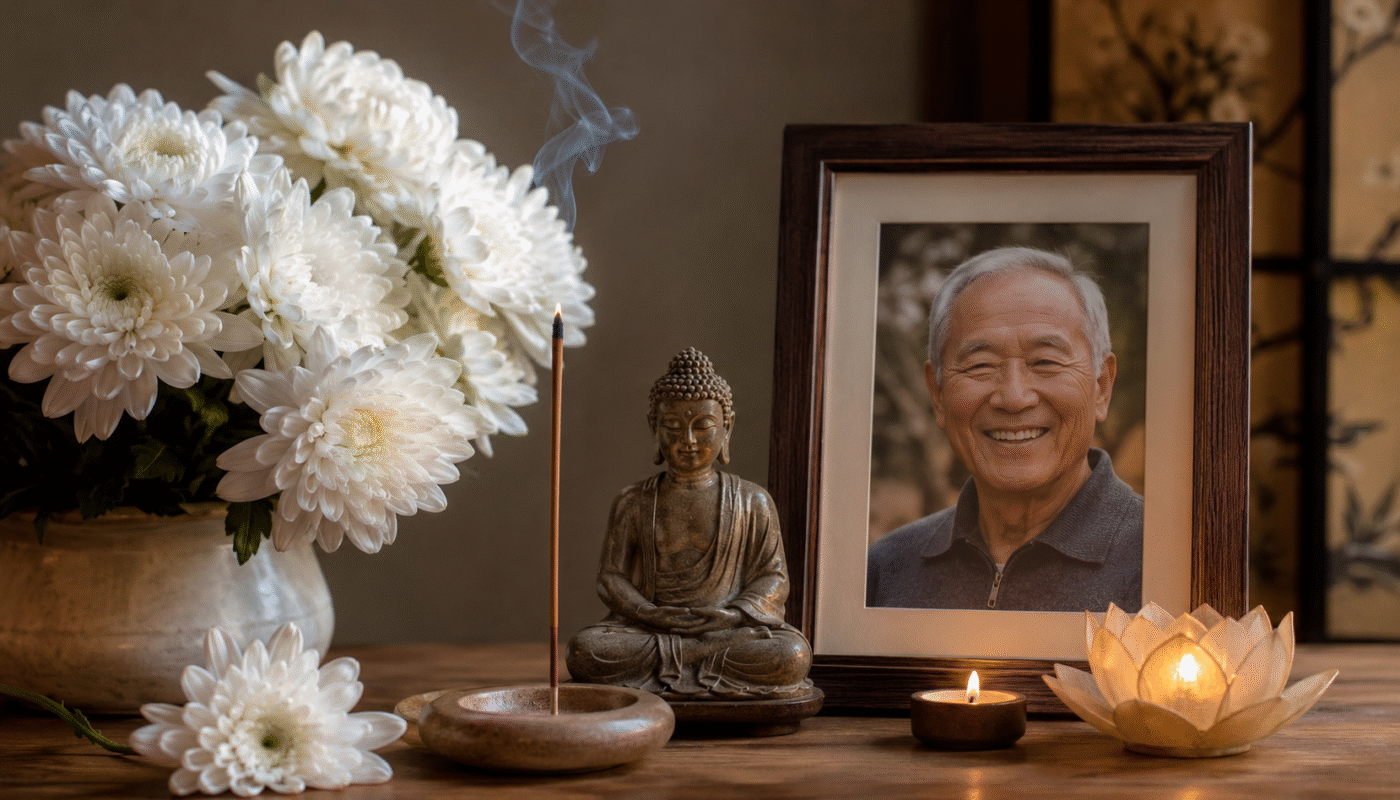
Chinese funeral traditions combine ancient Confucian values, Buddhist and Taoist religious practices, and deep cultural reverence for ancestors. These customs, refined over thousands of years, emphasize filial piety, proper respect for the deceased, and maintaining harmonious relationships between the living and the dead. Understanding Chinese funeral practices helps Chinese American families honor their heritage and helps others participate respectfully in Chinese funeral ceremonies.
This guide explores traditional Chinese funeral customs, their symbolic meanings, and how these practices are observed and adapted in Bay Area Chinese communities.
Core Chinese Beliefs About Death and Ancestors
Chinese funeral practices stem from philosophical and religious teachings that have shaped Chinese culture for millennia.
Filial Piety (孝 Xiào)
Filial piety—respectful devotion to parents and ancestors—forms the foundation of Chinese funeral traditions. Confucian teaching holds that honoring parents doesn’t end at death but continues through proper funeral rites and ongoing ancestor veneration. A respectful funeral demonstrates the family’s virtue and ensures the ancestor’s peaceful transition.
Ancestor Veneration
Chinese tradition views death not as complete separation but as a transformation. The deceased becomes an ancestor who continues to influence and protect the living family. In return, the family honors ancestors through offerings, prayers, and remembrance. This reciprocal relationship maintains family harmony across generations.
The Afterlife Journey
Chinese beliefs about the afterlife blend Buddhist, Taoist, and folk religious concepts:
The soul’s journey: Traditional belief holds that the soul must pass through various stages or realms before reaching its final destination. Proper funeral rites help ease this passage.
Multiple souls: Some Chinese traditions believe each person has multiple souls—hun (spiritual soul) and po (physical soul)—that separate at death and require different care.
Judgment and rebirth: Buddhist influences introduce concepts of karmic judgment and potential rebirth, while Taoist ideas emphasize natural cycles and spiritual immortality.
Traditional Chinese Funeral Customs
Chinese funerals follow specific customs rich in symbolism and meaning.
Preparing for Death
When death approaches, traditional practices include:
Return home: If possible, the dying person returns to the family home to pass away surrounded by family.
Bathing and dressing: After death, the body is bathed and dressed in special burial garments or the person’s finest clothes. New clothes in white, black, brown, or blue are traditional.
Placement: The body is positioned with feet toward the door, ready to begin the journey to the afterlife.
Covering mirrors: Mirrors in the home may be covered to prevent the deceased’s spirit from being trapped in reflection.
White cloth: A white cloth covers the face, later removed before the funeral for viewing.
The Wake and Viewing
The wake period allows family and community to pay respects:
Duration: Traditional wakes last 3, 5, or 7 days (odd numbers considered auspicious). Modern practice often shortens this to 1-3 days.
Home or funeral home: Wakes may occur at the family home (traditional) or funeral home (contemporary).
Continuous presence: Family members take turns maintaining a vigil with the deceased, never leaving them alone.
Altar setup: An altar displays the deceased’s photograph, incense, candles, food offerings, and symbolic items. Fresh flowers (particularly white chrysanthemums) are placed near the casket.
Mourning attire: Family members wear specific mourning clothes indicating their relationship to the deceased: – White for immediate family (children, spouse) – Black for extended family – Blue or green for more distant relations
Headbands: Sons and daughters may wear white or colored headbands as signs of mourning.
Symbolic Elements and Offerings
Chinese funerals incorporate rich symbolism:
Incense: Continuously burning incense purifies the space and carries prayers to the heavens. Three sticks represent earth, heaven, and humanity.
Joss paper: Special paper money and symbolic paper items (houses, cars, clothing) are burned to provide the deceased with resources in the afterlife.
Food offerings: Favorite foods of the deceased are placed on the altar, particularly white rice in a bowl with chopsticks stuck upright (only done for the deceased).
Color symbolism: – White: Primary mourning color (unlike Western black) – Red: Avoided completely as it symbolizes joy and celebration – Black and dark colors: Also appropriate for mourning
Numbers: Odd numbers (3, 5, 7) are considered yang and appropriate for funerals.
The Funeral Procession
Traditional funeral processions follow specific customs:
Leading the way: A photograph of the deceased leads the procession, carried by a family member.
Loud mourning: Wailing and crying demonstrate proper grief and respect. The louder the mourning, the greater the respect shown.
Musicians: Some traditional funerals include musicians playing drums, gongs, or traditional instruments.
Paper objects: Large paper houses, cars, or other items may be carried in the procession to be burned later.
Order of mourners: Family members walk in hierarchical order based on their relationship to the deceased, with sons taking prominent positions.
Buddhist and Taoist Funeral Elements
Many Chinese funerals incorporate Buddhist or Taoist religious practices.
Buddhist Chanting
Buddhist monks often participate in Chinese funerals:
Chanting services: Monks chant sutras to help the deceased’s spirit transition peacefully and achieve a favorable rebirth.
Prayer sessions: Multiple chanting sessions may occur during the wake period.
Merit transfer: The family makes donations to monasteries and performs good deeds, dedicating the merit to the deceased.
Taoist Rituals
Taoist priests may conduct ceremonies:
Purification rites: Rituals to purify the deceased’s spirit and ease their journey.
Protective talismans: Paper talismans may be burned or placed with the body for spiritual protection.
Cosmic harmony: Taoist practices aim to restore cosmic balance disrupted by death.
Burial and Cremation Practices
Chinese families choose between burial and cremation based on tradition, beliefs, and practical considerations.
Traditional Burial
Feng shui: Traditional Chinese burials involve careful selection of burial sites according to feng shui principles. The location, direction, and surrounding environment should provide good fortune to descendants.
Casket positioning: The casket is positioned to face an auspicious direction, often south or east.
Burial items: Personal items, symbolic objects, or treasured possessions may be buried with the deceased.
Grave marking: Traditional Chinese graves feature horseshoe-shaped structures or elaborate monuments with Chinese inscriptions.
Cremation
Modern Chinese families increasingly choose cremation:
Buddhist influence: Buddhism’s acceptance of cremation makes it compatible with Chinese traditions.
Practical considerations: Limited cemetery space in Asia and cost factors in America encourage cremation.
Urn placement: Cremated remains are placed in urns and may be: – Kept at home on an ancestral altar – Placed in a columbarium – Buried in a cemetery – Scattered in meaningful locations (less traditional)
Mourning Periods and Customs
Chinese tradition prescribes specific mourning observances.
The 49-Day Period
Weekly ceremonies: Ceremonies on the 7th, 14th, 21st, 28th, 35th, 42nd, and 49th days help the soul transition through afterlife stages.
49th day significance: The 49th day marks the end of the soul’s journey and determination of its next existence. A major ceremony occurs on this day.
Family responsibilities: The family makes offerings, burns joss paper, and may host meals for relatives and friends.
First-Year Observances
100-day ceremony: A significant memorial approximately 100 days after death.
One-year anniversary: A major memorial service marks the first death anniversary.
Mourning restrictions: During the mourning period, the family: – Avoids celebrations, weddings, and festivals – Refrains from wearing bright colors – May not cut hair or trim beards (in very traditional families) – Avoids temple visits and celebrations
Ongoing Ancestor Veneration
After the initial mourning period, ongoing practices honor ancestors:
Home altar: Many Chinese families maintain ancestral altars with photographs, incense, and offerings.
Festival observances: Special attention to ancestors during Qingming Festival (Tomb Sweeping Day), Ghost Festival, and Chinese New Year.
Regular offerings: Periodic offerings of food, incense, and paper money maintain the relationship with ancestors.
Regional and Generational Variations
Chinese funeral customs vary across regions and generations.
Regional Differences
Cantonese traditions: Southern Chinese (Cantonese, Hakka) customs may differ from Northern traditions in music, food offerings, and specific rituals.
Taiwanese practices: Taiwan blends traditional Chinese customs with local developments and strong Buddhist influence.
Hong Kong customs: Hong Kong Chinese funerals often combine traditional elements with British colonial influences.
Generational Changes
Traditional vs. modern: Older generations often prefer full traditional observances, while younger Chinese Americans may simplify or adapt practices.
Time constraints: Multi-day wakes shorten to one or two days for working families.
Religious influence: Some Chinese Americans adopt Christian practices while retaining Chinese cultural elements.
Cost considerations: Expensive traditional elements may be simplified for practical reasons.
Chinese Funerals in America
Bay Area Chinese families adapt traditional practices to American contexts.
Common Adaptations
Funeral home services: Most Bay Area Chinese funerals occur at funeral homes rather than family homes.
Shorter wakes: One to three days instead of traditional week-long observances.
Weekend timing: Funerals scheduled for weekends to allow working family and friends to attend.
Cremation increase: Higher cremation rates than in traditional China due to cost and space.
Bilingual services: Services conducted in both Chinese and English for mixed-generation families.
Professional monks: Buddhist monks hired specifically for funeral chanting rather than family temple relationships.
Maintaining Cultural Essence
Even with adaptations, families preserve core elements:
White mourning clothes: Family members wear white or mourning colors.
Incense and offerings: Altar with incense, food, and symbolic items.
Joss paper burning: Burning paper money and symbolic items (often in designated areas outside funeral homes).
Proper procession: Maintaining order and hierarchy in the funeral procession.
Ancestor veneration: Continued home altar practices and festival observances.
Attending a Chinese Funeral
Non-Chinese friends and colleagues can support bereaved families by:
What to wear: White, black, or dark conservative clothing. Avoid red or bright colors completely.
Monetary gifts: White envelopes (白金, bai jin) containing money help offset funeral costs. Odd amounts are appropriate.
Offering condolences: Simple expressions like “Please accept my condolences” or “I’m sorry for your loss” are appropriate. Avoid extended conversation with the family during the service.
Respecting customs: Follow the family’s lead regarding incense offering, bowing to the deceased, and other rituals.
Viewing the deceased: If the casket is open, approach respectfully, bow slightly, and step back.
Avoiding taboos: Don’t wear red, bring red flowers, give even-numbered monetary gifts, or photograph the deceased.
Serving Chinese Families at Monte Vista
Monte Vista Memorial Gardens serves Bay Area Chinese families with understanding of traditional Chinese funeral customs. Our team can work with families to coordinate burial arrangements that respect cultural practices, and can help connect families with Chinese Buddhist monks, Taoist priests, and funeral directors experienced in Chinese customs.
Whether your family observes traditional practices from mainland China, Taiwan, Hong Kong, or adapts customs to contemporary American life, Monte Vista provides respectful, culturally competent support for burial and interment.
Our team understands the importance of feng shui in burial site selection and the symbolic elements essential to Chinese funeral traditions. We work with families to honor these ancient customs while meeting practical requirements in modern American settings.
Key Takeaways
Understanding Chinese funeral traditions helps families honor their heritage meaningfully:
-
Filial piety: Chinese funerals demonstrate respect and devotion to parents and ancestors, a core Confucian value.
-
Rich symbolism: Colors (white for mourning), offerings (incense, food, joss paper), and numbers (odd) carry deep meaning.
-
Multiple stages: Wakes, funeral services, burial/cremation, and ongoing observances create comprehensive mourning processes.
-
Ancestor veneration: Death transforms the deceased into an ancestor requiring ongoing honor and offerings.
-
Adaptable traditions: Chinese American families successfully blend traditional customs with contemporary American practices.
Honoring Chinese Traditions with Respect
Chinese families throughout the Bay Area trust Monte Vista to support burial arrangements that honor their cultural heritage and family traditions. Our knowledge of Chinese funeral customs and coordination with Chinese religious leaders helps ensure meaningful, authentic ceremonies.
Call 510-299-1174 to discuss Chinese funeral arrangements, or speak with your family about coordinating traditional services at Monte Vista Memorial Gardens.