
Montevista | Islamic Burial Practices: Complete Guide to Muslim Funeral Traditions
Islamic Burial Practices: Complete Guide to Muslim Funeral Traditions


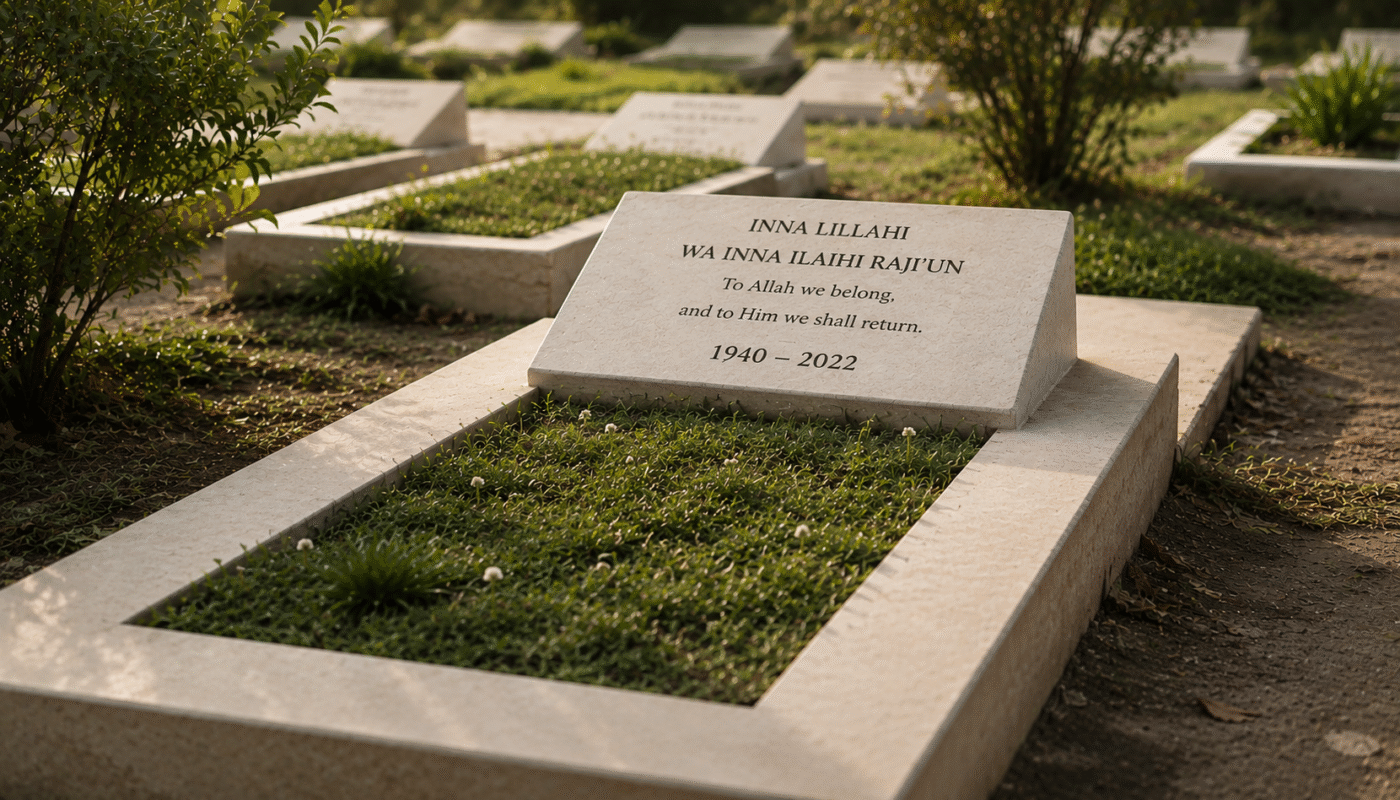
Planning a Muslim funeral means honoring sacred traditions rooted in the teachings of the Qur’an and the example of Prophet Muhammad (peace be upon him). Islamic burial practices emphasize simplicity, speed, and reverence, reflecting the belief that the soul returns to Allah and the body should return naturally to the earth.
This comprehensive guide explains Islamic funeral customs from the moment of death through burial and mourning, helping Muslim families navigate these sacred practices with knowledge and confidence.
Core Islamic Beliefs About Death and Burial
Islamic funeral practices stem from fundamental religious teachings about life, death, and the hereafter.
The Islamic View of Death
Muslims believe that death is a transition from this temporary world to eternal life. The soul departs the body and returns to Allah, where it awaits the Day of Judgment. This perspective shapes every aspect of Islamic burial practices, emphasizing that:
Life is a trust from Allah, and death is simply returning that trust. Muslims are encouraged to remember death often and prepare spiritually for this inevitable journey.
The body deserves respect even after death. Islamic law requires careful, dignified treatment of the deceased, avoiding anything that would dishonor or mutilate the body.
Simplicity honors equality. Just as all souls are equal before Allah, Islamic burial practices emphasize simple, uniform treatment regardless of wealth or social status.
Why Prompt Burial Matters
Islamic tradition strongly emphasizes burying the deceased as quickly as possible, ideally within 24 hours of death. Several reasons support this practice:
Religious obligation: The Prophet Muhammad (peace be upon him) taught that burial should not be delayed unnecessarily. Prompt burial demonstrates respect for the deceased and fulfillment of the living’s duty.
Natural process: Quick burial allows the body to return naturally to the earth without artificial preservation.
Spiritual belief: Some Islamic teachings suggest the soul remains aware of delays, making prompt burial an act of kindness to the deceased.
Practical considerations: In hot climates where Islam originated, prompt burial was also a practical necessity.
Modern circumstances sometimes require brief delays for family to gather or legal requirements to be met, which Islamic scholars generally accommodate as necessary exceptions.
Preparing the Body: Ghusl and Kafan
Islamic law prescribes specific preparation of the body, performed by members of the Muslim community according to religious guidelines.
Ghusl: The Ritual Washing
Ghusl is the sacred washing of the deceased, performed by knowledgeable Muslims of the same gender as the deceased. This ritual purification cleanses the body and prepares it for burial.
Who performs ghusl: Typically, family members or community volunteers trained in the proper procedure perform ghusl. Men wash male deceased; women wash female deceased. Husbands may wash their wives and wives may wash their husbands.
The ghusl process follows a specific sequence:
- The body is placed on a washing table or clean surface, covered to maintain modesty
- Gentle pressure is applied to the abdomen to expel any remaining waste
- Private areas are washed without uncovering the body
- Wudu (ablution for prayer) is performed on the deceased
- The body is washed three times with water, using soap or camphor
- Additional washings (five or seven times) may be performed if needed
- The body is dried with clean towels
Throughout ghusl, those performing the washing recite prayers and maintain the deceased’s dignity. The process takes place in private, with only those necessary present.
Kafan: The Burial Shroud
After ghusl, the deceased is wrapped in kafan, simple white cloth shrouds. Islamic tradition requires three pieces of cloth for men and five for women, though practices vary by cultural tradition.
For men, the kafan typically consists of: – Izar (covering from navel to feet) – Qamis (shirt covering from shoulders to feet) – Lifafah (full-body sheet wrapped completely around)
For women, the kafan typically includes: – Izar (waist wrapper) – Qamis (shirt) – Khimar (head covering) – Sidr (chest covering) – Lifafah (full-body wrapper)
The white cloth symbolizes purity and equality. No jewelry, makeup, or decorative items are placed on the body. Men who have completed Hajj (pilgrimage to Mecca) may be shrouded in their ihram (pilgrimage garments).
The kafan is tied at the head and feet with simple knots that will be untied when the body is placed in the grave, allowing direct contact with the earth.
Coordinating Ghusl Preparation
Monte Vista Memorial Gardens can work with Muslim families to coordinate ghusl preparation, helping connect families with appropriate facilities and community members who can perform this sacred ritual according to Islamic requirements. Our staff understands the importance of prompt preparation and works respectfully with families and community members to coordinate the process.
The Janazah: Islamic Funeral Prayer
The Salat al-Janazah (funeral prayer) is a communal obligation in Islam. When performed by sufficient members of the community, the obligation is fulfilled for all Muslims.
The Nature of Janazah Prayer
Unlike regular Islamic prayers, the janazah is performed standing throughout, with no bowing or prostration. The prayer asks for Allah’s mercy and forgiveness for the deceased and offers supplications for the bereaved.
The janazah consists of four takbirs (saying “Allahu Akbar” – God is Greatest):
First takbir: Followed by recitation of Surah al-Fatihah (the Opening chapter of the Qur’an)
Second takbir: Followed by prayers asking for blessings upon Prophet Muhammad (peace be upon him)
Third takbir: Followed by supplications for the deceased, asking Allah’s mercy and forgiveness
Fourth takbir: Followed by supplications for the living Muslims and conclusion with greetings of peace
Where Janazah Is Performed
The janazah prayer may be performed at various locations:
At the mosque: Many Muslim communities hold janazah at the local mosque, where the congregation gathers for prayer.
At the cemetery: Some communities perform janazah at the graveside, combining the prayer with burial.
In an open space: Large gatherings may take place in parking areas or open spaces that can accommodate many people.
The body is present during janazah, positioned in front of the rows of worshippers with feet pointing toward the qiblah (direction of Mecca).
Who Attends
All Muslims are encouraged to attend janazah prayers, as participating earns spiritual reward. Large community turnout demonstrates support for the bereaved family and fulfills the communal obligation.
Non-Muslim friends and family members may respectfully observe janazah, though they typically do not participate in the prayer itself. Their presence shows support for the grieving family.
Islamic Burial Requirements
Islamic law establishes specific requirements for burial, though practices vary across different Muslim communities and cultural traditions.
Burial Timing
As discussed earlier, Islamic tradition requires burial as soon as practically possible. In the Bay Area, this typically means:
- Same-day burial if death occurs early enough and preparation can be completed
- Next-day burial in most cases
- Slight delays when death occurs near sunset or when family must travel from a distance
California law allows prompt burial after a death certificate is issued, which Monte Vista coordinates efficiently with Muslim families.
Traditional Islamic Burial Practices
Traditional Islamic burial follows specific practices:
Direct earth burial: Islamic law prefers placing the shrouded body directly in the earth without a casket, allowing natural decomposition and fulfilling the Qur’anic verse “From the earth We created you, and into it We will return you” (20:55).
Body position: The deceased is placed on their right side, facing the qiblah (direction of Mecca). In California, this typically means facing northeast toward Mecca.
Grave depth: Graves should be deep enough that scent does not emerge and animals cannot disturb the remains, traditionally shoulder height or deeper.
Grave structure: The lahd (side niche) is traditional—a shelf carved into the side of the grave where the body rests, with the opening sealed with bricks or stone. Alternatively, the shaqq (straight-down grave) places the body at the bottom with planks or stones covering it before earth is added.
Modern Adaptations
California regulations and practical considerations sometimes require adaptations:
Burial containers: Many cemeteries require outer burial containers (vaults) for ground stability. When required, Muslim families typically use simple concrete vaults while maintaining other Islamic burial practices.
Simple caskets: When caskets are required by cemetery policy, Muslim families choose simple wooden caskets without metal parts, opened at the grave so the shrouded body can be removed and placed directly on the earth when possible.
Grave liners: Some cemeteries offer compromises such as grave liners with removable bottoms, allowing the shrouded body to rest on earth while meeting cemetery maintenance requirements.
Monte Vista works with Muslim families to honor traditional preferences while meeting necessary regulations, finding solutions that respect both Islamic practice and practical requirements.
Filling the Grave
Muslim community members participate in filling the grave with earth, using shovels or hands to return soil over the deceased. This communal act is considered a final service to the deceased and earns spiritual reward.
As earth is placed in the grave, participants may recite verses from the Qur’an, including “From it (earth) We created you, and into it We return you, and from it We will bring you forth once more” (20:55).
Grave Markers
Islamic tradition favors simple grave markers. Elaborate monuments or decorations are discouraged, as they contradict the principle of equality in death.
Traditional Muslim grave markers: – Use simple stones or modest headstones – Include the deceased’s name and dates – May include brief Qur’anic verses or Islamic phrases – Avoid photographs or representations of people – Orient to show the direction of the qiblah
The grave surface is typically flat or only slightly raised, avoiding the appearance of elaborate construction.
Islamic Mourning Traditions
Islam provides guidance for mourning that balances grief with faith, community support, and gradual return to normal life.
The Three-Day Mourning Period
General mourning lasts three days, during which the community gathers to support the bereaved family. During this time:
The family receives visitors who offer condolences with the traditional phrase “Inna lillahi wa inna ilayhi raji’un” (To Allah we belong and to Him we shall return).
Community members bring food to the family home, relieving them of cooking responsibilities during early grief.
Qur’an recitation often takes place, with family and community members reading from the Qur’an and offering prayers for the deceased.
Expressions of grief are permitted but should be moderate. Loud wailing, tearing clothes, or excessive displays are discouraged, as they may suggest displeasure with Allah’s decree.
Iddah: Mourning Period for Widows
Widows observe a special mourning period called iddah lasting four months and ten days. During iddah, widows:
- Remain in their homes (unless necessary to leave)
- Avoid wearing decorative clothing or jewelry
- Refrain from using perfume or cosmetics
- Do not accept marriage proposals (though they may be received after iddah ends)
This period allows time for grief, ensures no pregnancy exists before remarriage, and demonstrates respect for the deceased spouse.
Continuing Remembrance
Beyond the initial mourning period, Muslims honor the deceased through:
Du’a (supplication): Regular prayers asking Allah to forgive the deceased and grant them paradise
Sadaqah jariyah (ongoing charity): Giving charity in the deceased’s name, particularly supporting causes they valued
Fulfilling vows: Completing any religious obligations the deceased intended but did not finish
Good deeds: Living righteously and performing good actions, dedicating the spiritual reward to the deceased
Avoiding innovation: Islamic tradition discourages setting specific days for memorial gatherings (such as 40-day observances) not prescribed in Islamic law, though cultural practices vary
Cultural Variations Within Islamic Practice
While core Islamic burial practices remain consistent across Muslim communities, cultural traditions add diversity to how these practices are observed.
Regional and Cultural Differences
Middle Eastern traditions may include specific funeral customs, food traditions during mourning, and community gathering practices that reflect local culture.
South Asian Muslims might incorporate cultural elements such as specific mourning garments, community meals, or Qur’an reading schedules that complement Islamic requirements.
African American Muslim communities often blend Islamic practices with African American cultural traditions, creating meaningful observances that honor both Islamic law and community heritage.
Convert Muslims may combine Islamic requirements with elements meaningful to their family background, creating observances that respect both Islamic law and family connections.
Sunni and Shi’a Differences
While core burial practices are similar, some differences exist:
Shi’a Muslims may include additional prayers or rituals, particular supplications, and may observe commemorative gatherings on specific days after death.
Sunni Muslims typically follow the practices described in this article, with variation by school of thought (Hanafi, Maliki, Shafi’i, or Hanbali).
Both traditions emphasize prompt burial, ritual washing, simple shrouding, funeral prayer, and reverent burial.
Attending a Muslim Funeral: Guidance for Non-Muslims
Non-Muslim friends and family members may respectfully attend Muslim funerals to support grieving loved ones:
Dress modestly: Both men and women should wear conservative clothing. Women may wish to bring a scarf to cover their hair, though this is not required for non-Muslim attendees.
Offer condolences with simple, sincere words such as “I’m sorry for your loss” or “My thoughts are with you and your family.”
Observe respectfully: Stand quietly during the janazah prayer. You need not participate in the prayer itself, but quiet, respectful presence is appreciated.
Avoid certain phrases: Do not say the deceased is “in a better place” unless you share Islamic beliefs, as this assumes knowledge of Allah’s judgment.
Follow family’s lead: If you’re unsure about specific practices, observe what others do or ask family members for guidance.
Your presence demonstrates support and care, which the family will appreciate regardless of religious differences.
Serving Bay Area Muslim Families
Monte Vista Memorial Gardens serves Muslim families throughout the Bay Area with respect for Islamic burial traditions and understanding of religious requirements. Our team can coordinate closely with local mosques and Islamic centers to support prompt burial, and can help connect families with appropriate facilities for ghusl and preparation.
Our team understands the importance of simple burial, proper body positioning toward Mecca, and accommodation of Islamic practices within California regulations. We work efficiently to meet the Islamic preference for burial within 24 hours and can help coordinate so that community members can perform sacred rituals at appropriate locations according to religious requirements.
Whether your family follows traditional practices strictly or adapts customs to contemporary circumstances, Monte Vista provides knowledgeable support that honors your faith without pressure or judgment.
Key Takeaways
Understanding Islamic burial practices helps Muslim families honor their faith traditions while navigating practical requirements:
-
Prompt burial: Islamic law requires burial as soon as possible, ideally within 24 hours of death.
-
Sacred preparation: Ghusl (ritual washing) and kafan (shrouding) are performed by community members according to specific Islamic guidelines.
-
Funeral prayer: Salat al-Janazah is a communal obligation, performed by the Muslim community to pray for the deceased.
-
Simple burial: Islamic tradition emphasizes direct earth burial in simple shrouds, avoiding embalming and elaborate caskets.
-
Structured mourning: Three-day community mourning provides support, with additional requirements for widows.
Honoring Islamic Traditions with Respect
Muslim families across the Bay Area trust Monte Vista to facilitate Islamic burial practices with cultural competence and genuine understanding. Our facilities, coordination, and respectful approach help families observe sacred traditions while meeting necessary practical requirements.
Call 510-299-1174 to discuss how we can support your family’s Islamic burial traditions, or speak with your imam about coordinating services at Monte Vista Memorial Gardens.