
Montevista | Korean Funeral Practices: Confucian Traditions and Modern Customs
Korean Funeral Practices: Confucian Traditions and Modern Customs


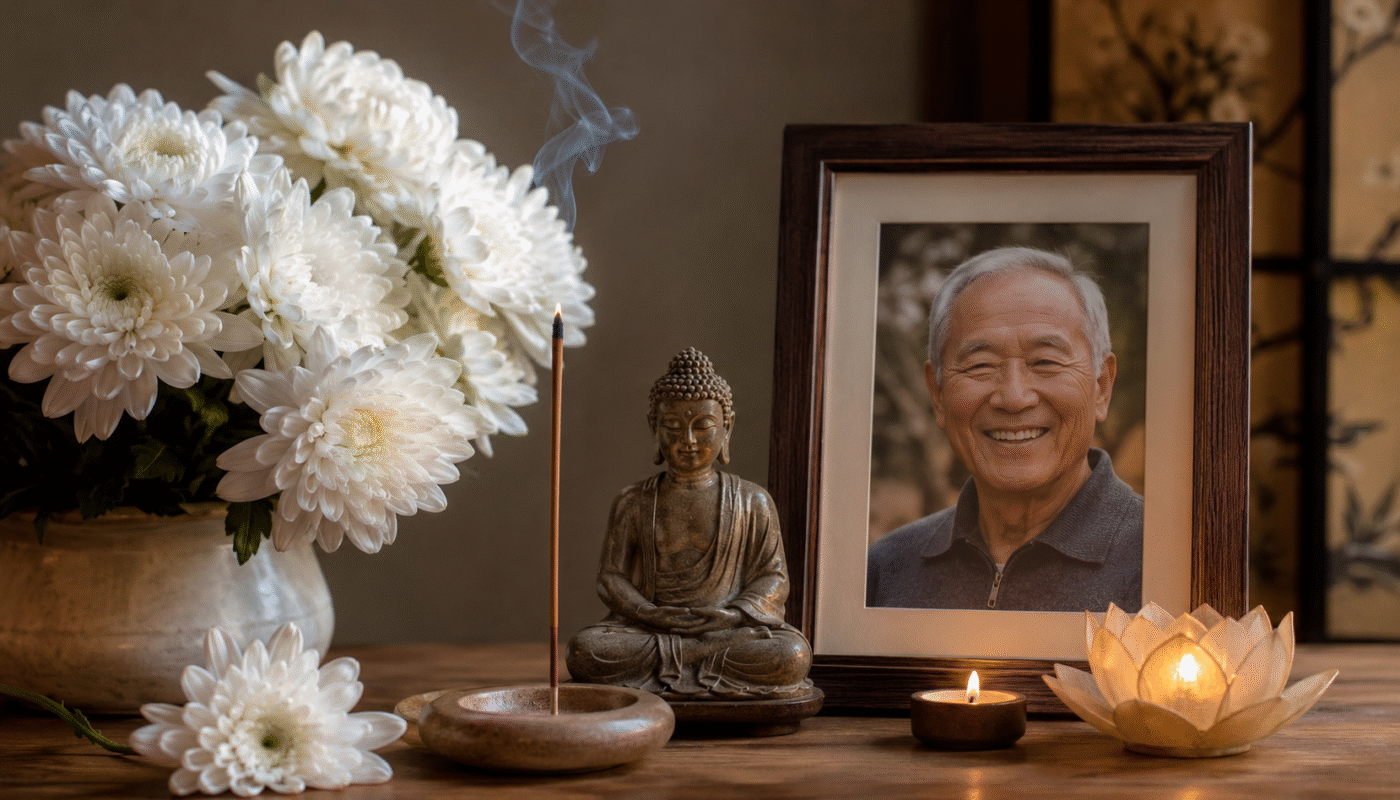
Korean funeral traditions blend ancient Confucian principles emphasizing filial piety and ancestor veneration with Buddhist spiritual practices and modern adaptations. These customs, refined over centuries, create elaborate three-day ceremonies honoring the deceased while strengthening family bonds across generations. Understanding Korean funeral practices helps Korean American families maintain cultural connections and helps others participate respectfully in Korean funeral traditions.
This guide explores traditional Korean funeral customs, their philosophical foundations, and how these practices continue in Bay Area Korean communities.
Core Korean Beliefs About Death
Korean attitudes toward death reflect Confucian philosophy, Buddhist spirituality, and indigenous Korean traditions.
Confucian Foundations
Confucianism shapes the fundamental structure of Korean funeral practices:
Filial piety (효 hyo): Respect and devotion to parents represents the highest virtue in Confucian teaching. This duty doesn’t end at death but continues through proper funeral rites and lifelong ancestor veneration.
Hierarchical order: Family relationships follow strict hierarchy determining funeral roles, mourning obligations, and ceremonial positions. The eldest son bears primary responsibility for funeral arrangements and ancestral rites.
Propriety and ritual: Performing funeral ceremonies with exact propriety demonstrates respect for the deceased and maintains social harmony. Specific rituals follow precise traditional formats.
Continuing relationships: Death doesn’t sever family bonds. The deceased becomes an ancestor who continues to influence and protect living descendants, who in turn honor ancestors through offerings and ceremonies.
Buddhist Influences
Many Korean families incorporate Buddhist elements:
Rebirth cycle: Buddhist teaching about karma and rebirth influences Korean views of the afterlife.
Merit for the deceased: Prayers, chanting, and good deeds by the living generate merit helping the deceased achieve favorable rebirth.
Monk participation: Buddhist monks may conduct chanting ceremonies during the funeral period.
49-day observance: Some Korean families follow the Buddhist tradition of ceremonies every seven days for 49 days after death.
Indigenous Korean Beliefs
Pre-Confucian and pre-Buddhist Korean shamanic traditions contribute elements:
Spirit world: Traditional beliefs hold that spirits of the dead remain connected to the living world.
Geomancy (풍수 pungsu): Korean feng shui influences burial site selection for family prosperity.
Ancestral protection: Properly honored ancestors provide blessings; neglected ancestors may cause misfortune.
Traditional Korean Funeral Structure
Korean funerals traditionally follow a three-day format with specific rituals.
Samil Jang (삼일장) – Three-Day Funeral
Traditional duration: Korean funerals traditionally last three days from death to burial, though modern practice sometimes extends to five or seven days.
Modern timing: In contemporary Korea and America, families often schedule funerals for weekends, making the actual duration flexible while maintaining three ceremonial days.
Funeral home setting: Modern Korean funerals occur at funeral homes (장례식장 jangnyesikjang) rather than family homes, with dedicated facilities for viewing, mourning, and ceremonial meals.
Immediate Arrangements After Death
When death occurs, the family initiates specific traditions:
Covering the face: A white cloth or traditional hemp cloth covers the deceased’s face.
Ancestral notification: Traditional practice involved symbolically notifying ancestors by making announcements at the family ancestral altar.
Establishing the funeral location: Setting up the funeral hall with the deceased’s photograph, ritual table, and mourning space.
Appointing the chief mourner: The eldest son (or eldest child if no sons) becomes the chief mourner (상주 sangju) with primary ceremonial responsibilities.
The Wake and Mourning Period
The three-day period allows extended family and community to pay respects.
Funeral Hall Setup
Photo altar: The deceased’s photograph is displayed prominently on an altar with candles, incense, and offerings.
Ritual table: A table displays food offerings, flowers (typically white chrysanthemums), and ceremonial items.
Reception area: Separate space for receiving visitors, with the chief mourner and immediate family greeting guests.
Condolence book: Visitors sign a book offering condolences and may leave monetary gifts.
Mourning Attire
Traditional Korean mourning dress follows specific conventions:
Chief mourner: Wears traditional hemp mourning clothes (상복 sangbok) including a headband and armband in some traditional families.
Immediate family: Wears black mourning clothes with black armbands. In very traditional families, sons may wear white or hemp mourning garments.
Extended family: Wears dark, conservative clothing.
Mourning ribbons: Different colored ribbons or armbands may indicate relationship to the deceased.
Visitor Customs
Visitors follow specific etiquette when paying respects:
Bowing: Upon entering, visitors bow twice to the deceased’s photograph. Some families maintain the traditional three bows.
Offering incense: Visitors may light incense sticks and bow.
Condolences to family: Brief, simple condolences to the chief mourner and family. “삼가 조의를 표합니다” (samga joeul pyohamnida – “I express my deepest condolences”) is traditional.
Monetary gifts (부의금 buuigeum): White envelopes containing money help offset funeral costs. The amount varies, but contributions are expected from friends, colleagues, and family.
Shared meals: Funeral halls provide meals throughout the three days. Visitors typically stay to eat, demonstrating community support.
Continuous Presence
Family vigil: Family members, particularly the chief mourner, maintain continuous presence at the funeral hall, often staying overnight.
Receiving guests: The chief mourner greets each visitor personally, accepting condolences while seated in the designated mourning position.
Limited activities: The chief mourner and immediate family remain at the funeral hall, avoiding regular activities, entertainment, or celebrations during the three-day period.
Food and Ritual Offerings
Korean funeral traditions include specific food customs.
Ritual Table Offerings
Traditional foods: The ritual table displays specific foods with symbolic meaning: – Rice (representing sustenance) – Fruit (particularly Korean pears, apples, and persimmons) – Fish and meat (demonstrating abundance) – Rice cakes (traditional ceremonial food) – Alcohol (typically soju or makgeolli)
Arrangement: Foods are arranged in specific traditional patterns following ritual specifications.
Regular refreshing: Offerings are refreshed throughout the three-day period.
Meals for Mourners and Visitors
Continuous food service: Korean funeral halls provide meals around the clock for family and visitors.
Common dishes: Simple, comfort foods like soup (guk), rice, kimchi, and side dishes (banchan).
Community support: Extended family and friends may bring food or help serve meals, embodying the Korean concept of jeong (정 – deep affection and connection).
The Funeral Service
On the third day (or designated funeral day), the formal ceremony occurs.
Ceremony Structure
Final respects: Family and close friends gather for final ceremonial respects.
Ritual bows: The chief mourner leads family members in formal bows to the deceased.
Closing the casket: The casket is sealed in preparation for burial or cremation.
Religious elements: Buddhist families may have monk chanting; Christian Korean families may have a brief church service or prayers.
Eulogy: Family members or respected community members may offer remembrances, though this is less elaborate than in Western funerals.
Procession to Cemetery or Crematorium
Photo bearer: Someone carries the deceased’s framed photograph leading the procession.
Flower arrangements: The casket is surrounded by elaborate flower arrangements, transported with the hearse.
Family follows: The chief mourner and immediate family follow in cars behind the hearse.
Burial and Cremation
Korean families choose between traditional burial and increasingly common cremation.
Traditional Burial
Geomancy: Traditional Korean burials involve selecting auspicious burial sites according to pungsu (Korean feng shui) principles, choosing locations with proper mountain, water, and directional alignments for family prosperity.
Grave mounds: Traditional Korean graves feature distinctive rounded earth mounds, though flat Western-style markers are increasingly common in America.
Cemetery location: In Korea, mountain burial sites are traditional. In America, Korean families choose cemetery plots with considerations of accessibility and community.
Graveside ceremony: Brief ceremony with final bows and placing earth on the grave.
Modern Cremation
Growing preference: Younger Korean generations increasingly choose cremation for environmental, practical, and cost reasons.
Buddhist acceptance: Cremation aligns with Buddhist practices, making it acceptable for Buddhist Korean families.
Christian acceptance: Korean Christian families increasingly accept cremation despite historical preference for burial.
Columbarium: Cremated remains are typically placed in columbariums, often in facilities specifically serving Korean communities.
Post-Funeral Mourning Customs
Korean mourning practices extend well beyond the funeral.
Immediate Post-Funeral Period
Returning home ceremony: After burial or cremation, the family returns home with a brief ceremony welcoming the deceased’s spirit to the home ancestral altar.
Initial mourning: The chief mourner and immediate family observe an intensive mourning period, traditionally avoiding celebrations and maintaining somber dress.
Mourning duration: Traditional mourning lasted three years for parents (later reduced to one year), but modern practice varies from 100 days to one year.
Jesa (제사) – Ancestral Rites
Jesa represents the heart of ongoing Korean ancestor veneration:
Death anniversary jesa: Annual ceremonies on the anniversary of death (기제사 gijesa) continue for several generations.
Ceremony structure: Formal rituals with specific food offerings arranged on a ritual table, formal bows by descendants, and offerings of rice wine.
Eldest son’s duty: Primary responsibility falls to the eldest son, though modern families may share duties among all children.
Food offerings: Elaborate traditional foods prepared following specific recipes and arrangements—typically including rice, soup, meat, fish, vegetables, rice cakes, and fruit.
Time of observance: Traditionally performed at midnight or early morning of the death anniversary date.
Generational duration: Families may observe jesa for parents, grandparents, and great-grandparents, maintaining connections four generations back.
Seasonal Ancestral Rites
Chuseok (추석): Korea’s harvest festival (similar to Thanksgiving) includes visiting ancestral graves and conducting memorial ceremonies.
Lunar New Year (설날): The new year includes ancestral rites (차례 charye) honoring deceased family members.
Hansik (한식): A spring festival for tending graves and conducting ceremonies.
Korean Christian Funeral Variations
Many Korean Americans are Christian, creating unique blended traditions:
Church services: Korean Christian funerals often include church memorial services with hymns, prayers, scripture readings, and pastor’s message.
Reduced traditional rituals: Christian families typically simplify or omit Confucian ritual elements like formal bowing and food offerings.
Maintaining cultural elements: Even Christian Korean families often maintain three-day funeral halls, monetary gift customs, and communal meal traditions.
Jesa adaptations: Christian Korean families may replace traditional jesa with prayer services or family gatherings without ritual elements.
Biblical integration: Christian funerals emphasize resurrection hope and eternal life while maintaining Korean cultural expressions of respect and mourning.
Korean American Adaptations
Bay Area Korean families balance traditional practices with American contexts.
Common Modifications
Funeral home convenience: Almost all Korean American funerals occur at funeral homes, many specializing in serving Korean communities.
Weekend scheduling: Three-day funerals timed for weekends allowing working family and community to attend.
Bilingual elements: Services incorporating both Korean and English for multi-generational families.
Simplified jesa: Some families simplify annual death anniversary observances while maintaining the essential elements.
Cremation increase: Higher cremation rates among Korean Americans than in traditional Korean practice.
Preserved Traditions
Korean American families maintain core cultural elements:
Three-day funeral structure: The meaningful three-day communal mourning period continues.
Monetary condolences: White envelope gift customs remain strong.
Continuous food service: Providing abundant meals for community gatherings.
Formal respect rituals: Bowing, organized family reception, and proper mourning dress.
Eldest son responsibilities: Maintaining the chief mourner role and generational duties.
Annual commemorations: Continued death anniversary observances, even if simplified.
Attending a Korean Funeral
Non-Korean friends and colleagues can support bereaved families respectfully:
What to wear: Conservative dark or black clothing. Avoid bright colors and casual dress.
Monetary gift: Bring a white envelope containing cash (부의금 buuigeum). Any amount helps, but contributions typically range from $50-$200 depending on relationship. Use new bills if possible.
Envelope handling: Present the envelope at the reception desk, not directly to the family. Staff will record your contribution and provide a receipt.
Greeting the family: Approach the chief mourner (usually seated in a designated area), bow slightly, and offer brief condolences in Korean (“삼가 조의를 표합니다”) or English (“I’m so sorry for your loss”).
Ritual participation: Observe the bowing ritual at the photo altar. Follow others’ lead—typically two bows. You may light incense if comfortable.
Staying for a meal: It’s respectful to stay and eat something. Declining food may seem rude in Korean culture.
Duration of visit: Brief visits (20-30 minutes) are appropriate. Close friends may stay longer or visit multiple times during the three-day period.
Serving Korean Families at Monte Vista
Monte Vista Memorial Gardens serves Bay Area Korean families with understanding of traditional Confucian funeral customs, jesa ancestral rites, and the significance of proper burial site selection according to pungsu principles. While many Korean American funerals occur at specialized Korean funeral halls, we support Korean families seeking cemetery services with cultural sensitivity and respect.
Our team understands the importance of auspicious site selection for burial plots, the significance of annual death anniversary observances, and the value of maintaining ancestral connections through generations. We work with Korean Buddhist monks, Korean Christian pastors, and Korean funeral directors to coordinate culturally appropriate services.
Whether your family maintains traditional Confucian practices, blends Korean customs with Christian faith, or adapts traditions to contemporary American life, Monte Vista provides respectful support honoring both Korean cultural heritage and individual family preferences.
Key Takeaways
Understanding Korean funeral practices reveals deep cultural values of family, respect, and continuity:
-
Filial piety: Proper funeral rites demonstrate children’s respect and devotion to parents, a core Confucian virtue.
-
Three-day structure: The traditional samil jang creates extended time for community gathering, mourning, and demonstrating support.
-
Chief mourner role: The eldest son (or eldest child) bears primary responsibility for funeral arrangements and ongoing ancestral rites.
-
Jesa ceremonies: Annual death anniversary observances maintain connections between living descendants and deceased ancestors across generations.
-
Community support: Korean funerals emphasize collective participation with monetary gifts, shared meals, and continuous presence demonstrating jeong (deep communal connection).
Honoring Korean Traditions with Respect
Korean families throughout the Bay Area trust Monte Vista to provide cemetery services respecting their cultural heritage and ancestral traditions. Our understanding of Korean funeral customs ensures respectful, appropriate support for families maintaining these meaningful practices.
Call 510-299-1174 to discuss Korean funeral arrangements, burial site selection, or coordinating traditional observances at Monte Vista Memorial Gardens.