
Montevista | Vietnamese Funeral Rituals: 49-Day Mourning Period Explained
Vietnamese Funeral Rituals: 49-Day Mourning Period Explained


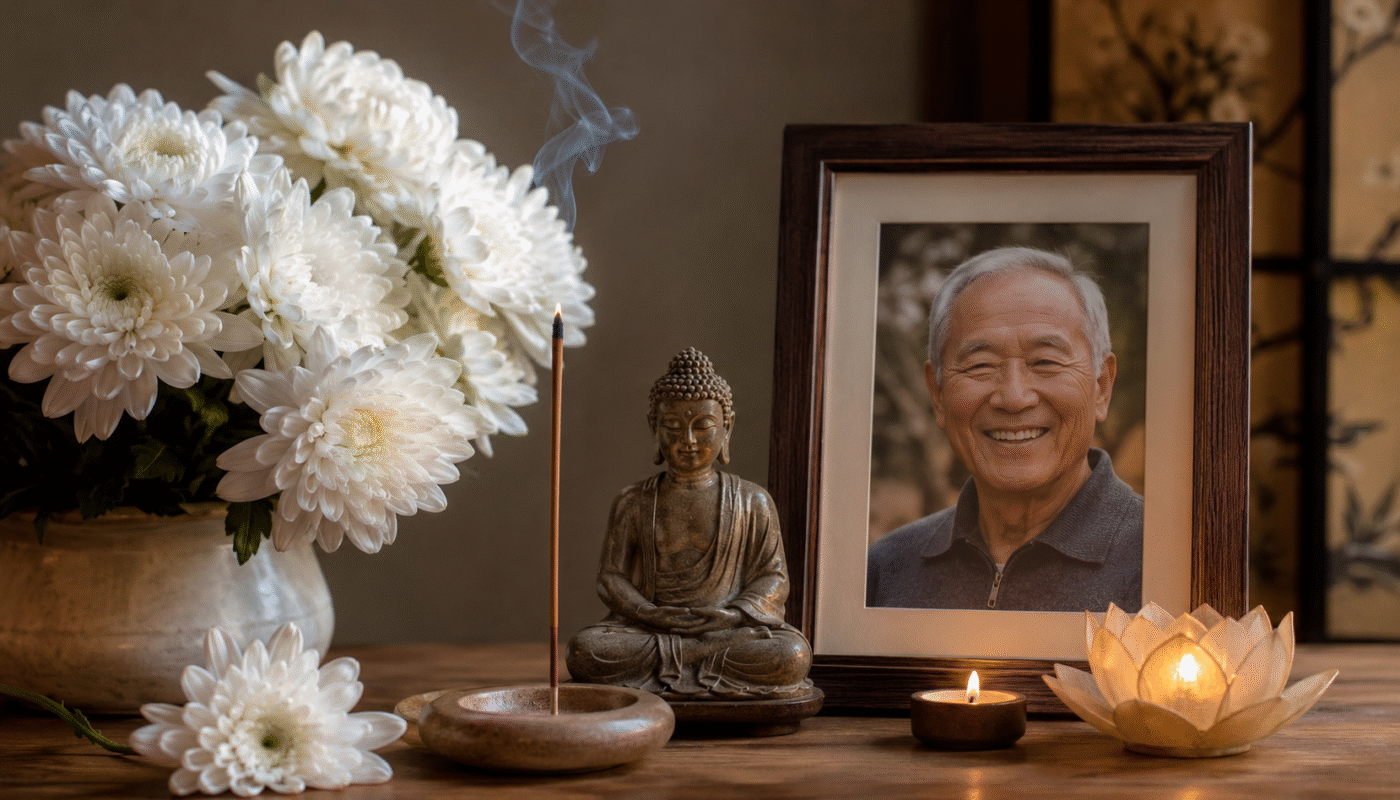
Vietnamese funeral rituals blend Mahayana Buddhist practices, Confucian values, Taoist beliefs, and indigenous Vietnamese traditions into elaborate ceremonies honoring the deceased while supporting their soul’s journey. The 49-day mourning period forms the cornerstone of Vietnamese funeral customs, with specific rituals marking the soul’s transition through afterlife realms toward rebirth or enlightenment.
This guide explains Vietnamese funeral practices from death through the completion of mourning, helping Vietnamese families honor traditions and helping others understand these meaningful customs.
Core Vietnamese Beliefs About Death
Vietnamese attitudes toward death reflect the blending of multiple spiritual traditions.
Buddhist Foundations
Rebirth cycle: Mahayana Buddhist teaching holds that consciousness continues through cycles of rebirth according to karma.
The bardo journey: The 49-day period after death represents the soul’s journey through transitional states before next rebirth.
Merit generation: Good deeds by the living generate merit that can be transferred to the deceased, influencing their rebirth circumstances.
Chanting and prayers: Buddhist sutras and mantras support the deceased’s consciousness during transition.
Confucian Filial Piety
Ancestor veneration: Confucian teaching emphasizes honoring parents and ancestors as fundamental duty.
Family hierarchy: Funeral roles follow family hierarchy, with eldest son bearing primary responsibilities.
Proper rituals: Performing correct funeral rites demonstrates filial piety and brings honor to the family.
Continuing obligations: Children’s duty to parents continues after death through offerings and remembrance.
Ancestor Worship
Ongoing relationships: Vietnamese believe deceased family members become ancestors who influence living descendants’ fortunes.
Home altars: Most Vietnamese families maintain ancestral altars with photos, incense, and offerings.
Reciprocal care: Families care for ancestors through rituals and offerings; ancestors protect and guide the living.
Preparing for Death and Immediate Aftermath
Vietnamese customs begin before death when possible.
As Death Approaches
Return home: If possible, the dying person returns to the family home to pass away surrounded by family.
Clean clothing: The dying person is dressed in clean clothes, traditionally white.
Buddhist prayers: Monks may be invited to chant prayers helping the person maintain calm awareness.
Family presence: Extended family gathers to be present during the final moments.
Immediately After Death
Body care: The body is washed, dressed in white or traditional formal clothing, and positioned with feet toward the main door.
White cloth: A white cloth covers the face until the funeral.
Home altar: An ancestral altar is set up immediately with the deceased’s photo, incense, candles, and offerings.
Notification: Extended family and community are notified promptly.
Mourning dress: Family members put on white mourning clothes or headbands.
The Wake Period
Vietnamese wakes create extended time for family and community gathering.
Duration and Setting
Length: Traditional wakes last 3-7 days, though modern practice often shortens to 2-4 days.
Location: Wakes traditionally occur at the family home but increasingly take place at funeral homes in the U.S.
Continuous presence: Family members maintain vigil, with the deceased never left alone.
Open casket: The casket remains open throughout the wake for continuous viewing.
Altar and Offerings
Elaborate altar: A multi-tiered altar displays the deceased’s photo, incense, candles, fruit, flowers, and food offerings.
White flowers: White flowers, particularly chrysanthemums, surround the casket and altar.
Incense: Incense burns continuously, and visitors offer incense when paying respects.
Food offerings: Rice, fruit, tea, and the deceased’s favorite foods are placed on the altar daily.
Paper offerings: Joss paper (symbolic money) and paper items (houses, clothes, cars) are burned to provide for the deceased in the afterlife.
Buddhist Rituals
Monk chanting: Buddhist monks chant sutras during wake evenings, often for several hours.
Family participation: Family members may join in chanting or prostrate before the altar.
Merit dedication: All religious activities generate merit dedicated to the deceased.
Prayer sessions: Multiple chanting sessions throughout the wake period.
The Funeral Service
Vietnamese funerals combine religious ceremony with cultural customs.
Service Structure
Procession to altar: Family and mourners process to the altar in hierarchical order.
Incense offering: Attendees offer incense at the altar, bowing to the deceased’s photo.
Buddhist chanting: Monks lead extended chanting sessions.
Eulogies: Family members may share memories, though this is less emphasized than religious rituals.
Final viewing: Final opportunity for mourners to view the deceased before the casket is closed.
Mourning Attire
White for children: Sons and daughters wear white clothing and white headbands.
Black for spouse: Surviving spouse wears black.
Specific headbands: Different colored headbands indicate relationship to deceased—white for children, blue for grandchildren, red for great-grandchildren.
Formal dress: Extended family wears conservative dark clothing.
Procession to Cemetery
Order of procession: Strict hierarchical order with eldest son leading, carrying the deceased’s photo.
Symbolic items: Family carries the altar photo, incense burner, and ceremonial items.
White flowers: The hearse and procession cars are decorated with white flowers.
Music: Some families include traditional Vietnamese funeral music.
Burial Practices
Vietnamese burial customs blend tradition with practical considerations.
Traditional Burial
Earth burial: Vietnamese tradition strongly prefers earth burial to cremation.
Orientation: The grave is positioned according to feng shui principles for family fortune.
Burial items: Personal items, money, and symbolic objects may be buried with the deceased.
Grave decoration: White flowers and incense are placed on the fresh grave.
Cremation
Growing acceptance: Younger generations and practical constraints lead to increasing cremation.
Buddhist accommodation: Buddhism accepts cremation, making it compatible with Vietnamese beliefs.
Urn placement: Cremated remains may be kept at home, placed in columbarium, or buried.
Graveside Rituals
Final prayers: Monks or family offer final prayers at the graveside.
Burning offerings: Paper money and symbolic items are burned at the cemetery.
Earth offering: Family members may place earth on the casket.
First three days: Family visits the grave for three consecutive days after burial, bringing offerings and burning incense.
The 49-Day Mourning Period
The 49 days following death constitute the critical mourning and spiritual transition period.
Weekly Ceremonies
Seven-week cycle: Ceremonies occur every seven days (7th, 14th, 21st, 28th, 35th, 42nd, and 49th days).
Buddhist teaching: Each week represents the soul’s passage through a different bardo realm.
Monk chanting: Monks return to chant sutras at each weekly ceremony.
Family gathering: Extended family gathers for prayers and shared meals.
Offerings: Fresh food, incense, and paper offerings are made at each ceremony.
The 49th Day Ceremony
Critical milestone: The 49th day determines the soul’s next rebirth, making this ceremony most important.
Elaborate ritual: The largest and most elaborate ceremony of the mourning period.
Major feast: Family hosts a substantial meal for extended family, friends, and community.
Final transition: After this ceremony, the soul is believed to have moved to its next existence.
Formal mourning end: The 49th day marks the end of intensive mourning, though remembrance continues.
Ongoing Remembrance
Vietnamese ancestral practices continue long after the initial mourning.
100-Day and One-Year Ceremonies
100-day anniversary: Significant ceremony approximately three months after death.
One-year anniversary: Major memorial marking the first death anniversary with large family gathering.
Subsequent anniversaries: Annual death anniversary observances continue throughout generations.
Home Ancestral Altar
Permanent altar: Most Vietnamese families maintain home altars honoring all deceased family members.
Daily offerings: Incense, tea, rice, and fruit are offered daily or regularly.
Special occasions: Ancestors are honored during Lunar New Year, death anniversaries, and family celebrations.
Communication: Families “inform” ancestors of important events—weddings, graduations, business ventures.
Lunar New Year (Tết)
Ancestor invitation: Ancestors are invited to return home for Tết celebrations.
Special offerings: Elaborate foods and gifts are offered on the ancestral altar.
Grave visits: Families clean and decorate graves before Tết.
Family unity: Living and dead family members are reunited during celebrations.
Death Anniversary (Giỗ)
Annual commemoration: Each death anniversary is observed with prayers, offerings, and family meals.
Generational observance: Death anniversaries may be observed for multiple generations of ancestors.
Family gathering: Descendants gather annually to honor and remember.
Traditional foods: Specific dishes the ancestor enjoyed are prepared.
Vietnamese Funerals in America
Bay Area Vietnamese families adapt traditional practices to American contexts.
Common Adaptations
Shorter wakes: 2-4 days instead of week-long traditional observances.
Funeral home venues: Most wakes and services occur at funeral homes rather than family homes.
Weekend scheduling: Timing ceremonies for weekends to accommodate work schedules.
Simplified 49-day observances: Some families observe only key days (7th, 49th) rather than all seven weeks.
Cremation increase: More Vietnamese Americans choose cremation for practical and cost reasons.
Maintaining Cultural Identity
Vietnamese American families preserve essential elements:
Buddhist monk participation: Coordinating with Vietnamese Buddhist temples for monk chanting.
49-day observance: Maintaining the critical weekly ceremonies even if simplified.
Home altars: Continuing ancestral altar traditions in American homes.
White mourning clothes: Children wearing white during wake and funeral.
Death anniversary observances: Annual giỗ ceremonies uniting family.
Vietnamese language: Conducting ceremonies in Vietnamese to preserve cultural connection.
Regional and Religious Variations
Vietnam’s diversity creates variations in funeral practices.
Regional Differences
Northern Vietnamese: Influence of Chinese customs, particular musical traditions.
Central Vietnamese: Specific regional practices reflecting Central Vietnam’s unique culture.
Southern Vietnamese: French colonial and tropical influences on customs.
Religious Variations
Buddhist-focused: Families emphasizing Buddhist rituals may have more monk involvement.
Catholic Vietnamese: Vietnamese Catholics blend Catholic funeral Mass with Vietnamese cultural elements like ancestor veneration.
Cao Dai: Followers of this Vietnamese religion incorporate specific theological teachings.
Generational Differences
First generation: Maintains traditional practices most closely.
Second generation: Balances Vietnamese customs with American integration.
Third generation: May observe key elements while simplifying extended rituals.
Attending a Vietnamese Funeral
Non-Vietnamese friends can support bereaved families respectfully:
What to wear: Conservative dark or white clothing. White is traditional Vietnamese mourning color.
Monetary gifts: White envelopes containing money (phần vàng) help offset funeral costs.
Incense offering: Approach the altar, take three incense sticks, light them, hold at forehead level while bowing three times, then place in the incense burner.
Condolences: Simple, sincere expressions are appropriate. Avoid extended conversation with the family during the service.
Respect rituals: Observe Buddhist chanting respectfully even if not participating.
Stay for meal: If invited to post-ceremony meal, attending shows respect.
Remove shoes: Some Vietnamese homes require shoe removal.
Serving Vietnamese Families at Monte Vista
Monte Vista Memorial Gardens serves Bay Area Vietnamese families with understanding of traditional Vietnamese Buddhist funeral customs and the significance of the 49-day mourning period. Our team can work with families to coordinate multi-day wakes at appropriate venues, Buddhist monk chanting ceremonies, and traditional rituals with incense and offerings.
We can coordinate with Vietnamese Buddhist temples, understand the importance of weekly ceremonies during the 49-day period, and support families in maintaining ancestral traditions. Whether your family recently immigrated or is multi-generational Vietnamese American, Monte Vista provides culturally sensitive support for traditional and adapted Vietnamese funeral practices.
Our team understands the significance of grave orientation and the value of proper ritual in Vietnamese custom. We’re committed to helping Vietnamese families arrange meaningful funeral services honoring both Buddhist faith and Vietnamese cultural heritage.
Key Takeaways
Understanding Vietnamese funeral rituals reveals deep spiritual and cultural values:
-
49-day journey: Weekly ceremonies support the soul’s transition through bardo realms toward next rebirth.
-
Buddhist practices: Monk chanting, merit generation, and religious offerings provide spiritual support for the deceased.
-
Ancestor veneration: Death transforms the deceased into an ancestor requiring ongoing honor and care.
-
Filial piety: Proper funeral rites demonstrate children’s respect and devotion to parents.
-
Community support: Extended family and Vietnamese community gather to support the bereaved through elaborate multi-week observances.
Honoring Vietnamese Traditions with Respect
Vietnamese families throughout the Bay Area trust Monte Vista to facilitate funeral services honoring their Buddhist faith and Vietnamese cultural heritage. Our experience with Vietnamese funeral customs ensures meaningful, authentic ceremonies supporting both the deceased’s spiritual journey and the living family’s needs.
Call 510-299-1174 to discuss Vietnamese funeral arrangements, or speak with your temple about coordinating traditional 49-day observances at Monte Vista Memorial Gardens.